01
TALKS
Accessible science
Research explained in a clear and engaging way. No specialist knowledge required, just curiosity and an interest in how science connects to everyday life.
THE FUNCTIONAL
IMPACT OF
FERMENTED FOODS
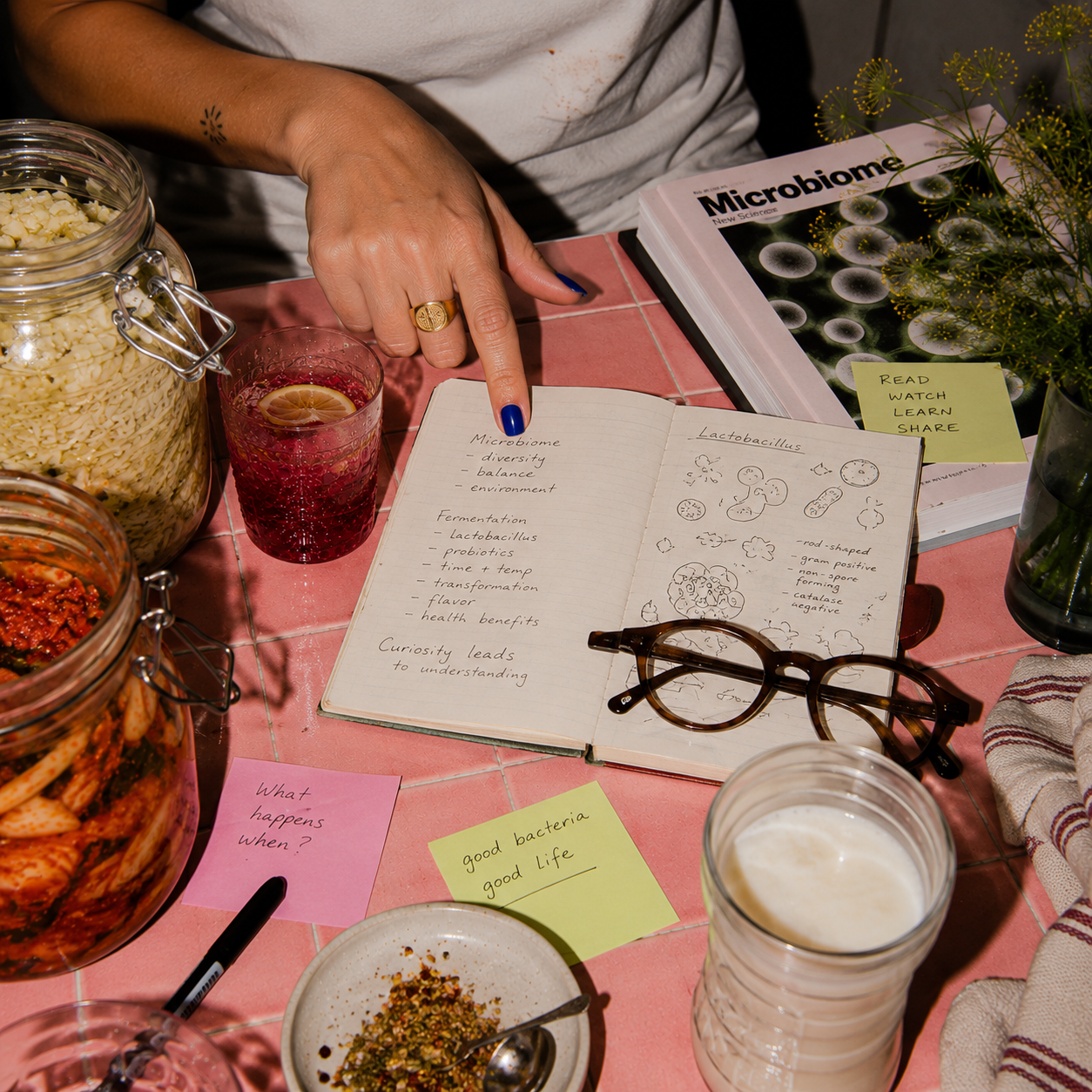
What really happens when we eat fermented foods? From kimchi and kefir to yoghurt and kombucha, this event explores the science behind fermented foods and what researchers are learning about their relationship with the gut microbiome.
Join us for an evening of science, discussion and discovery. Whether you are simply curious about food or interested in the latest research, everyone is welcome.
01 — THE QUESTION
Humans have been fermenting food for thousands of years, long before anyone knew what a microbe was. Bread, cheese, wine, yoghurt, sauerkraut and miso all have deep roots in cultures around the world.
What scientists are beginning to understand is why these foods matter. Fermented foods contain communities of bacteria and yeasts that transform what we eat. Inside each of us is another remarkable community: the gut microbiome, trillions of microbes that help shape our health, immunity and many other aspects of our biology.
What you eat does not just feed you. It feeds them too.
02 — THE EVENING
A ninety-minute evening built for curiosity, not credentials. Drop in, listen, ask anything, share a recipe.
Research explained in a clear and engaging way. No specialist knowledge required, just curiosity and an interest in how science connects to everyday life.
Fermented foods have been part of human diets for thousands of years. Discover the science hiding in ingredients you may already have in your kitchen.
What are scientists learning about the microbiome today? Explore some of the latest findings and the questions researchers are still trying to answer.
Take home inspiration for simple fermented foods and discover how some traditional recipes are made and enjoyed around the world.
Bring your questions, share your thoughts and join an open conversation with researchers and other members of the community.
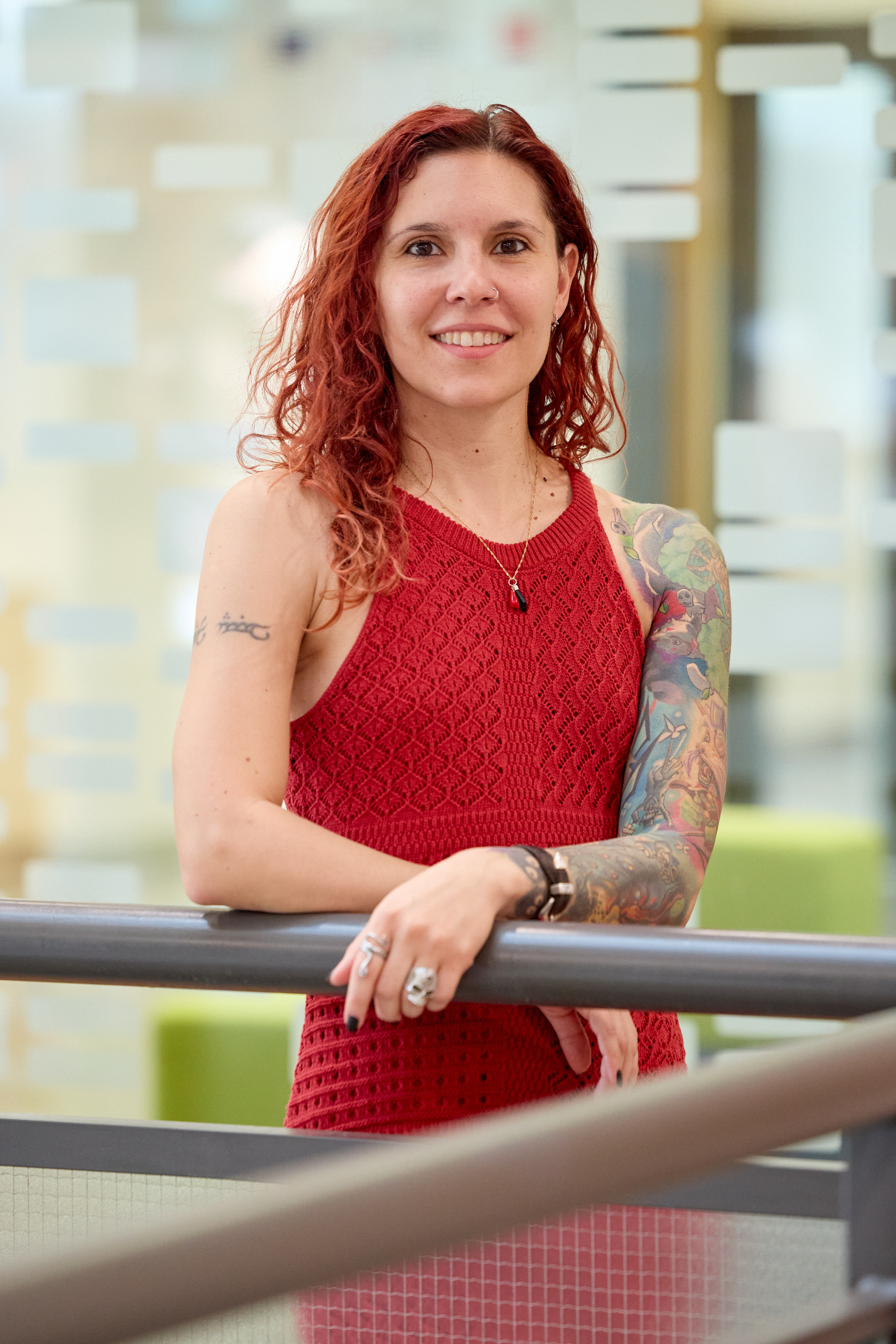
03 — YOUR HOST FOR THE EVENING
IMDEA Nutrition Institute
Dr. Laura Marcos Zambrano is a researcher specialising in the human gut microbiome, with expertise in metagenomics, bioinformatics and clinical microbiology. She leads the Host–Microbiome Interactions research line at the IMDEA Nutrition Institute in Madrid and is an Associate Professor at Alfonso X el Sabio University.
Her research explores how microbial communities interact with diet and human health, particularly in food-related conditions such as obesity and coeliac disease. Combining advanced computational approaches with microbiome science, she investigates how the trillions of microorganisms living in our bodies may influence disease risk, nutrition and wellbeing.
Alongside her research, Laura is a committed science communicator who actively works to bring microbiome research beyond the laboratory and into public conversations about food and health.
04 — TRY IT AT HOME
Three simple ferments to start with at home. Click a card for ingredients, method and the science behind each jar.
05 — THE INITIATIVE
Science in the Street is a FEBS initiative that brings science beyond the Congress and into the host city. Wherever the FEBS Congress takes place, this event creates an opportunity for researchers and the public to come together, explore ideas and discuss scientific discoveries that shape our everyday lives.
Each year, the conversation focuses on a topic of broad societal interest, connecting cutting-edge research with questions that matter beyond the laboratory. The aim is to make science more accessible, creating a space where anyone can ask questions, share perspectives and engage directly with the people behind the research.
In Maastricht, the spotlight falls on the gut microbiome and the fascinating relationship between fermented foods and human health. Through talks, discussion and shared experiences, visitors are invited to discover how science is helping us better understand the invisible microbial world within us and why it may matter for our wellbeing.
Science in the Street will return during the 51st FEBS Congress in Riga, Latvia, in July 2027, continuing FEBS' commitment to bringing science closer to society, one city at a time.
06 — WHO WE ARE
FEBS (the Federation of European Biochemical Societies) is a charitable organisation dedicated to advancing research and education in the molecular life sciences. Through a network of scientific societies across Europe and neighbouring regions, FEBS brings together researchers working to understand the molecular mechanisms that underpin life, health and disease.
For more than sixty years, FEBS has supported scientific discovery through fellowships, advanced courses, congresses, educational initiatives and scientific publications. By investing in researchers, fostering international collaboration and creating opportunities for training and knowledge exchange, FEBS helps advance research in fields ranging from biomedicine and biotechnology to nutrition, agriculture and environmental science.
As a not-for-profit organisation, FEBS reinvests income generated by its journals directly into activities that support the scientific community. Through its programmes and initiatives, FEBS is committed to strengthening scientific excellence, supporting the next generation of researchers and ensuring that scientific knowledge benefits society as a whole.
07 — PRACTICAL INFO
08 — KEEP GOING
Something sparked your curiosity? Discover a selection of books, videos and resources that explore the fascinating connections between fermented foods, the microbiome and human health.
 febs.network
Stories, interviews and insights from across the molecular life sciences. From microbiomes and nutrition to cancer biology, molecular medicine and biotechnology, discover how researchers are advancing our understanding of life at the molecular level.
Explore FEBS Network ↗febs.orgSupporting research, education and scientific collaboration in the molecular life sciences for more than sixty years. Through fellowships, advanced courses, congresses, publications and networking opportunities, FEBS invests in researchers and helps advance science for the benefit of society.
Visit FEBS.org ↗— AN INVITATION —
Whether you're passionate about food, fascinated by the microbiome, or simply curious about how science shapes everyday life, we'd love to welcome you.